Monday, 7 May 2012

Evaluation Question 3


What have you learned from your audience feedback? 

For the music video, I made a survey using Survey Monkey and posted this on different social networking sites. From the information I got back I found out that, a majority of the viewers were female and 66.7% of the people were between 14 and 17, whereas the rest were between 18 and 21 (this is the prime age for fans of the zombie horror genre.) I also asked what kind of music the audience likes to listen to and the two highest responses were Indie and Acoustic, which was good as the song is acoustic so it would have a large audience. All of the answers said that they thought the lyrics and visuals matched up with the lyrics of the song.
Before making the video, I did some audience profiling and found the prime age for zombie film lovers by looking on IMDB at the stats for a popular zombie film and the results show the highest percentage of people were under 18 and between 18-29. 


There was one comment that said ‘I even tried to watch the film Zombie Apocalypse... Your effects were better than theirs.’ This was a real boost to the effects and editing we used throughout the video. All of the feedback was very positive and so we felt no need to change anything about the video as both the creators and the audience were happy with the outcome.

I also made a survey for the ancillary products to find out what the audience would think of the products before publishing them. I posted the survey on several social networking sites again so it would be aimed at my peers.
From conducting this survey I found out that 100% of the audience were in-between 14-21; which is a limited age, but also the age of the target audience, but what was interesting is that only 16.7% of the answerers were male, which was unexpected.
The feedback was a real help and I took what the audience said and worked it into my products by decreasing the amount of fonts used and making the writing easier to read by making the design lighter.
A question I thought was important ' If you have seen the music video (You're A Zombie Now), do you understand the concept of the digipak and poster and think it all ties in? If not, why?'  had surprising answers for me. 
A majority of the answerers were saying the idea was good, and how they liked the map and torn edges (I decided to keep the torn edges because of the audience feedback), however another person awswered they couldn't see how any of the products linked together 'Not really! Other than the "blood" on the poster, didn't really see how the map ties into the zombies and stuff. However, this is just one person of the majority so I kept it all in. 
On my final question, If you have seen the music video (You're A Zombie Now), do you understand the concept of the digipak and poster and think it all ties in? If not, why?’ I was a little worried that the audience may not understand the link and think it was all a bit out of context, but after reading the responses it made me more confident as they were all very positive, with results such as ‘I think it all works well, the concepts make sense together to create an effective campaign.’


From the feedback, I learned to make the writing on the products clearer and easier to read, make sure all the writing is visible and to make it more authentic, I added a 'safe house' drawing onto the digipak for this. One comment said 'More consistency (same font throughout), have the text stand out a little more? The overall design with the map etc worked really well though!'
I took this into account and changed the fonts to the same two or three throughout, this way it wouldn't look so busy or cluttered. 

Evaluation Question 2


How effective is the combination of your main product with ancillary texts? 

I think the combination of the three main products (the video, digipak/sleeve and the magazine advertisement) work really well together as they each tell the story of where the characters are going and it’s quite an original and different idea on how a majority of bands are shown these days. As the digipak and the magazine are both very similar and just variations of each other, this is quite a common convention, but the actual idea of the maps and giving a little bit of back story to the characters is something quite unique.
There are a few artists who built a whole ‘world’ around their releases and this is what I tried to aim for here, it would create hype around the product and this may interest the audience as much as the music itself.  

Some musicians give their music a theme, either for just an album or a couple of songs, such as Lady Gaga and Green Day, and this is what I aimed for with my video. This could be a sequel to a story, it makes the audience ask a lot of questions and the ancillary products help to answer some of these, which I think is very important.


For the digipak and magazine I used the same fonts for the artists name, this would become his sort of logo, whenever he'd release something new he would use this font for his name, this way his fans would recognise it immediately as 'Sam Hart' and other people may keep seeing the name pop up and remember it from somewhere else and perhaps go search it to see what it means. Ed Sheeran has a similar idea with his 'paw print', he uses it on merch and on albums etc.
I also kept the song name font the same throughout, I chose this font as it's quite scrawly, as though someone had to write in it a rush, because the zombies are coming. This relates to the packaging as it shows where the survivors hope to head - a safe house. On both products these typefaces were kept the same, the only text different was the production companies logo 'zombie records' had a different font as they are a different company.
The colours I used on the products are both worn, used, yellow/orange tones, I added filters on Photoshop to enhance this, and also I dipped the actual work into tea to give it the sepia tone. This helped to make the paper look even more aged which adds a more realistic feel to it, especially as the sides are burnt and ripped up as well. However, this sepia look to these products contrasts with the harsh black and white in the video.

American band 'Weezer' also have an ongoing theme for some of their albums, however theirs is not so subtle as mine. They have simply kept a similar style for three of their albums known as 'The Red Album', 'The Blue Album' and 'The Green Album'. Each have the same font, just a different colour and a different pose on the font of the cover. 


Evaluation Question 4


How did you use media technologies in the construction and research, planning and evaluations stages?

When making all three promotional products many different media technologies were used such as, Adobe Photoshop, Blogger, Final Cut Pro, Garage Band, iMovie, YouTube, a graphics tablet and Survey Monkey.
When constructing audience feedback, I found the best way was to make surveys using Survey Monkey, this way I can link to a wide variety of people all over the world by using social networking sites such as Twitter, Facebook, Tumblr and others. Social Networking has become more interactive than ever in the last 12 months, you can now ‘Share’ or ‘Retweet’ certain articles that interest you and so others may also see them, I think this is very helpful. When it comes to getting responses for surveys I posted them on these sites and then followers or friends, passed it on so people who look at their page will also see. This means I can get a wider response and it won’t be subjected to only people who know me, which could be biased. After receiving the results, I would write about them on blogger.
Blogger was used to store all of my work and I labelled each post so they could be easily tracked and all the work for the products was in the same place. Blogger is a really good site to use for this, whenever I had an idea or something had changed when creating my products, I just made a new post about it. Using a blog to document work is a lot easier as everything is in one place, and it's very simple to search for anything you're looking for by labels or using the search bar. People who I am working with can also keep updated with what's going on and so can anyone else who's interested in the projects. 

In pre-production when drawing the storyboards we used a graphics tablet and drew straight into Photoshop with it, where we then added colour and writing. We decided to do it this way as it would be cleared and easier to upload onto Blogger and other sites.
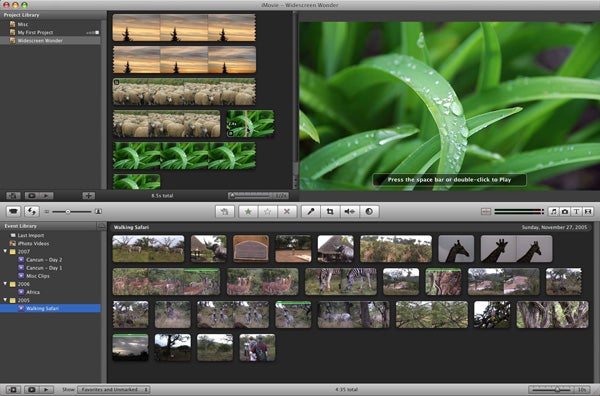
When making rough drafts of projects I would use iMovie, simply because it’s a lot simpler and it gives you a feel for what you could do, and then elaborate this rough copy using Final Cut Pro. The final video was all edited on Final Cut Pro and as our song was a little too long for the footage we had we also edited the song on there as well. We ripped the song from YouTube (with permission) as the singer has not officially released it and because it had some audio on it we didn’t want, we played around with garage band to sort this out until we were happy with the audio quality.
In the music video itself, a lot of effects were used to enhance the video and give it a different vibe. The main effect was that it was all changed to black and white but we also used transitions and special effects such as; Bad TV, Negative, Solarisation, Bad Film, black cuts, slow motion, fast motion, jump cuts, fade cuts and also just playing around with colour contrast to get the right look for clips.
All the lighting was natural as it was filmed outside in winter which gave it original footage a grey look to it. All the diegetic sound was muted so it wouldn’t interrupt the song and the shooting all took place in one day so the continuity would remain constant. 
The equipment used was a JVC handicam, a tripod and regular props such as, cricket bats, toy guns, fake blood, torn clothing and a sickle. 

In the print production I made the products myself by ripping and burning pages from a map, soaking them in tea to make them look aged and then scanning them into a computer where I edited them on Photoshop CS5. On Photoshop I adjusted the colour, contrast and brightness until I had the desired effect on my work and then added in the text, choosing suitable typefaces. I also had to created several layers when making the magazine ad, one layer was too dark, so I made another and rotated it to make it look different. Then I changed the opacity to about 35% on the top layer. This made the background look a lot lighter and the text much easier to read so I kept this in my final product.
I encountered a hiccup when I opened the files on an older version of Photoshop and realized it didn’t have the fonts I needed, so I had to then go back and reopen it on the newer edition after I finished the editing.

I created quotes from well known British celebrities and magazines to give the poster a more realistic feeling and made the digipak look like it would fit around a CD case and also added a spine to it in the post production. The celebrities and magazines were chosen specifically for the song and artist, so it would be aimed at the target audience.

Tuesday, 1 May 2012

Evaluation Question 1


In what ways does your media product use, develop or challenge forms and conventions of real media products?

I chose the song ‘You’re a Zombie Now’ by the American artist ‘Sam Hart’. As the song is about zombies, I found it only fitting to include zombies in the video itself. 
I am quite fond of zombie movies, such as 'Dawn of the Dead' and 'Zombieland', and so because of this background knowledge the basic conventions of zombie films is obvious, people encounter zombies, there’s an attack scene, someone usually get’s bitten and they might die. I knew the films, but not the music videos, so I researched into this and found several that all fitted the criteria.

One was by a band called ‘Keep You Honest’ the song ‘Lose Control’. The song itself is not about zombies, but the video goes very well with it. It’s shot in a cold season where there are no leaves on the trees and the characters are wrapped up warm, the video has a ‘cold’ feeling about it also, a grey tinge to it. I think this adds suspense to it and makes it more daunting.
In my own video, this was majorly enhanced as the whole video was made in black and white. Another convention was in key parts, the scene was put into slow motion, in some of the attack scenes in my video I added a slow motion effect to draw attention to what was happening and to increase anxiety.


My music video is purely narrative, much like ‘Keep You Honest’ was, however all the other music videos of this genre are a mixture of narrative and performance of the band so this breaks that convention; as well as the fact that a huge majority of ‘zombie’ songs are usually heavy metal, or pop punk, whereas ours is acoustic. Acoustic music is normally shown as being calm and tranquil, with relaxing videos, most likely with the singer themselves performing and playing guitar.
My music video breaks all those conventions. The artist is not shown, the song itself gets quite angry in places and this is depicted in the video and the storyline isn’t exactly relaxing. Not what you would expect from an acoustic song. I used the 'Lose Control' video for inspiration for mise en scene; make up, props, costumes and some shots as well as I think it's a very well done video for an amateur band. We chose a desolate location, much like the one they used, and also in a similar season. 


‘The Nearly Deads’ are a pop punk band whose song ‘Never Look Back’ is not about zombies either, but the video features a narrative, as well as the band playing and members themselves as victims running away from the undead. The video varies from the above as it is quite comical in places, so it has a comic factor which neither ‘Lose Yourself’ nor ‘You’re A Zombie Now’ have; though the latter is more light-hearted about it in the lyrics.

For the digipak I decided I would in fact make a sleeve instead. I made this decision because they are becoming increasingly more popular with artists such as Gorillaz and Laura Marling using them for their albums. They use a lot less packaging which is good for the environment and are a simple way to hold a CD. For a unsigned artist I think sleeves are a particularly good idea as they are so cheap and easy to manufacture; when a artist is starting out, the last thing they want to be doing is spending a lot of money on the packaging for their album/EP/single, and a cardboard sleeve is the best way to go in my opinion.

I made the sleeve cover myself and designed it like a map in a homemade kind of style. The reason I did this was because it fits in with the conventions of zombies stories, the character s are always trying to find a safe place, where it’s zombie free and have protection, so to elaborate on the video, this shows where the characters were planning on heading. 
 I got the homemade idea from a Jeff Buckley EP cover (which is also a CD sleeve), it is simply a napkin with a coffee ring on it and someone had written the title and the ink had been smudged off. Then a digital image of the artist had been planted over the top. I thought it was great idea and something so basic. The back cover is just as simple with the details, producer, record label and the track listing, and again another picture of the artist.


When designing the sleeve, I looked at others to see what details they featured, such as barcodes, record company/label name and a website where you can find out more about the artist. 
I used the same idea for the magazine poster so that the audience would become familiar with the concept and relate it to the artist – a bit like a logo or motif.


On both the products the same typefaces where used for the song title and the artist’s name, I thought it was important to keep consistency, and a reoccurring theme, throughout the advertising and digipak. Bands such as ‘Red Hot Chilli Peppers’ have a famous logo which fans all over the world will look at and understand, sometimes the logo’s will change when a new album come out or the band ‘re-makes’ themselves, but it’s something all the fans will notice. Another band are an acoustic/indie group called Bombay Bicycle Club who have kept a very similar logo throughout their career (up until there last album, which has a very different sound to the rest). 


I used some of Andrew Goodwins theories to help make my music video. Goodwin has five main statements when it comes to music videos: Thought beats, narrative and performance, the star image, relations of visual to song and technical aspects to music video.

When making the video I linked the lyrics in with the storyline of the song so that it followed a narrative, much like a film. When the artist says 'bullet between the eyes' it shows the character being shot. As the singers voice in the song is a little nervous and changes throughout, this fits in with the situation; he's scared about the girl becoming a zombie, and as the song progresses and grows stronger, so does the video. Star image does not play a vital part in this music video as it does not feature the artist himself, but instead others acting out the scenes of the music video. The video strongly illustrates the songs narrative, and I amplified the effects used and added them in several places throughout the video so the audience would recognize it and also set it in black and white. 

At the very start of the video the music and the cuts work in time together to create a pattern to go with the beat, I think it draws the audience in and maybe has a sort of hypnotic effect on them. Goodwin also looks at voyeurism, how women are represented and also intertextual references.
Voyeurism is the notion of looking, and there are a couple of subtle references of this in the video, but nothing we actually set out to do. There is only one female in the video which may say something, that men are natural survivors. But the two zombies are in fact male so did not survive. An iconic moment is when the girl get's turned into a zombie, and the boy shoots her. Why did the boy not get killed instead? We don't know. There are no real intertextual references in the video, only inspiration from other zombie films that I have seen.


Rough Evaluation Question 4


How did you use media technologies in the construction and research, planning and evaluations stages?

When making all three promotional products many different media technologies were used such as, Adobe Photoshop, Blogger, Final Cut Pro, Garage Band, iMovie, YouTube, a graphics tablet and Survey Monkey
http://cctmdev2.londonmet.ac.uk/nic0263/images/Social_Network_icons.jpg.

When constructing audience feedback, I found the best way was to make surveys using Survey Monkey, this way I can link to a wide variety of people all over the world by using social networking sites such as Twitter, Facebook, Tumblr and others. Social Networking has become more interactive than ever in the last 12 months, you can now ‘Share’ or ‘Retweet’ certain articles that interest you and so others may also see them, I think this is very helpful. When it comes to getting responses for surveys I posted them on these sites and then followers or friends, passed it on so people who look at their page will also see. This means I can get a wider response and it won’t be subjected to only people who know me, which could be biased. After receiving the results, I would write about them on blogger. Blogger was used to store all of my work and I labelled each post so they could be easily tracked and all the work for the products was in the same place.
In pre-production when drawing the storyboards we used a graphics tablet and drew straight into Photoshop with it, where we then added colour and writing. We decided to do it this way as it would be cleared and easier to upload onto Blogger and other sites.
When making rough drafts of projects I would use iMovie, simply because it’s a lot simpler and it gives you a feel for what you could do, and then elaborate this rough copy using Final Cut Pro. The final video was all edited on Final Cut Pro and as our song was a little too long for the footage we had we also edited the song on there as well. We ripped the song from YouTube (with permission) as the singer has not officially released it and because it had some audio on it we didn’t want, we played around with garage band to sort this out until we were happy with the audio quality.

In the music video itself, a lot of effects were used to enhance the video and give it a different vibe. The main effect was that it was all changed to black and white but we also used transitions and special effects such as; Bad TV, Negative, Solarisation, Bad Film, black cuts, slow motion, fast motion, jump cuts, fade cuts and also just playing around with colour contrast to get the right look for clips.
https://blogger.googleusercontent.com/img/b/R29vZ2xl/AVvXsEjWfbb0qPF5Z-__6aO4BKVC09X5bN1faomfGhi8Z_BsAcILFyG_ugPqP0FBhhgX708aMXwpjB8tCg8VZqeZU3k93WAv-E5H14t_nsejTkxxaX3_v_KDA-5BsLL_pQ2ibZ20QxDVZgaXzpA/s320/Zombie+poster+sdfghj.jpgAll the lighting was natural as it was filmed outside in winter which gave it original footage a grey look to it. All the diegetic sound was muted so it wouldn’t interrupt the song and the shooting all took place in one day so the continuity would remain constant. 
The equipment used was a JVC handicam, a tripod and regular props such as, cricket bats, toy guns, fake blood, torn clothing and a sickle. 

In the print production I made the products myself by ripping and burning pages from a map, soaking them in tea to make them look aged and then scanning them into a computer where I edited them on Photoshop CS5. On Photoshop I adjusted the colour, contrast and brightness until I had the desired effect on my work and then added in the text, choosing suitable typefaces. I encountered a hiccup when I opened the files on an older version of Photoshop and realized it didn’t have the fonts I needed, so I had to then go back and reopen it on the newer edition after I finished the editing.

I created quotes from well known British celebrities and magazines to give the poster a more realistic feeling and made the digipak look like it would fit around a CD case and also added a spine to it in the post production. The celebrities and magazines were chosen specifically for the song and artist, so it would be aimed at the target audience.

Rough Evaluation Question 3


What have you learned from your audience feedback? 

For the music video, I made a survey using Survey Monkey and posted this on different social networking sites. From the information I got back I found out that, a majority of the viewers were female and 66.7% of the people were between 14 and 17, whereas the rest were between 18 and 21 (this is the prime age for fans of the zombie horror genre.) I also asked what kind of music the audience likes to listen to and the two highest responses were Indie and Acoustic, which was good as the song is acoustic so it would have a large audience. All of the answers said that they thought the lyrics and visuals matched up with the lyrics of the song.

There was one comment that said ‘I even tried to watch the film Zombie Apocalypse... Your effects were better than theirs.’ This was a real boost to the effects and editing we used throughout the video. All of the feedback was very positive and so we felt no need to change anything about the video as both the creators and the audience were happy with the outcome.

I also made a survey for the ancillary products to find out what the audience would think of the products before publishing them. I posted the survey on several social networking sites again so it would be aimed at my peers.
From conducting this survey I found out that 100% of the audience were in-between 14-21; which is a limited age, but also the age of the target audience, but what was interesting is that only 16.7% of the answerers were male, which was unexpected.
The feedback was a real help and I took what the audience said and worked it into my products by decreasing the amount of fonts used and making the writing easier to read by making the design lighter.
On my final question, If you have seen the music video (You're A Zombie Now), do you understand the concept of the digipak and poster and think it all ties in? If not, why?’ I was a little worried that the audience may not understand the link and think it was all a bit out of context, but after reading the responses it made me more confident as they were all very positive, with results such as ‘I think it all works well, the concepts make sense together to create an effective campaign.’

Rough Evaluation Question 2


How effective is the combination of your main product with ancillary texts? 

I think the combination of the three main products (the video, digipak/sleeve and the magazine advertisement) work really well together as they each tell the story of where the characters are going and it’s quite an original and different idea on how a majority of bands are shown these days. As the digipak and the magazine are both very similar and just variations of each other, this is quite a common convention, but the actual idea of the maps and giving a little bit of back story to the characters is something quite unique.
There are a few artists who built a whole ‘world’ around their releases and this is what I tried to aim for here, it would create hype around the product and this may interest the audience as much as the music itself.  

Some musicians give their music a theme, either for just an album or a couple of songs, such as Lady Gaga and Green Day, and this is what I aimed for with my video. This could be a sequel to a story, it makes the audience ask a lot of questions and the ancillary products help to answer some of these, which I think is very important.

Followers